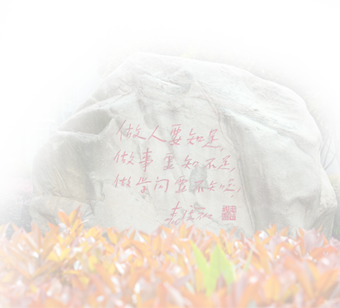
Prof. ZHANG Xu, a member of Chinese Academy of Science, is a distinguished graduate of Tongji Medical College at Huazhong University of Science and Technology (HUST). He returned to his alma mater to address the commencement ceremony for graduates of 2025. Reviewing his five-decade career as a doctor and a researcher in medicine, Prof. ZHANG encouraged the master’s and doctoral graduates to pursue personal development through preparation, persistence, and foresight.

Prof. ZHANG, who began his studies in 1978 following the reinstatement of China’s national college entrance examination, reflected on his journey from a student in Jingzhou to an internationally recognized surgeon. He shared three core principles that have been guiding his career.
He emphasized that “Opportunity favors the prepared mind,” illustrating the motto with a pivotal moment from the early 1990s. As a young doctor, he and Prof. LI Longcheng sought to translate a groundbreaking American urologic surgery atlas. Lacking funds but determined, they reached out to the author, Prof. Hinman, and with support from esteemed figures including Academicians Prof. WU Jieping and Prof. QIU Fazu, succeeded in publishing the work. This project not only impact the urologic practice in China but also connected Zhang to the global academia and mentors who shaped his future.
Prof. ZHANG also stressed the balance between visionary thinking and down-to-earth effort: “Keep your eyes on the stars, but your feet on the ground.” He described how, by engaging in over a decade of focused research and performing more than 800 surgeries, his team identified previously overlooked fascial planes around the adrenal gland. Their work translated a high-risk open procedure into a safe, minimally invasive technique now used worldwide—earning the National Science and Technology Progress Award and demonstrating that medical innovation requires both insight and endurance.
Finally, he urged graduates to “know the future to win in the future,” recalling how he and other young colleagues championed laparoscopic surgery when it was widely dismissed. Their perseverance helped them establish minimally invasive surgery in China and win international recognition. Prof. ZHANG highlighted that new transformations—driven by artificial intelligence and remote surgery—are awaiting today’s young graduates, challenging them to lead rather than follow.
He closed his speech by acknowledging the profound influence of his mentors and HUST, encouraging graduates to move forward amid uncertainties and, with courage and patience, to secure an even brighter future.




 Chinese