WUHAN, January 22, 2026– A research team led by Prof. LU Youming at the School of Basic Medicine, Tongji Medical College of Huazhong University of Science and Technology (HUST), published a landmark study in Cell that offers a new perspective for treating Alzheimer’s disease. The study revealed that a protein secreted by cancer cells can efficiently clear the toxic amyloid plaques in the brain, and the finding challenges the conventional alternatives that focus solely on the inhibition of plaque formation.
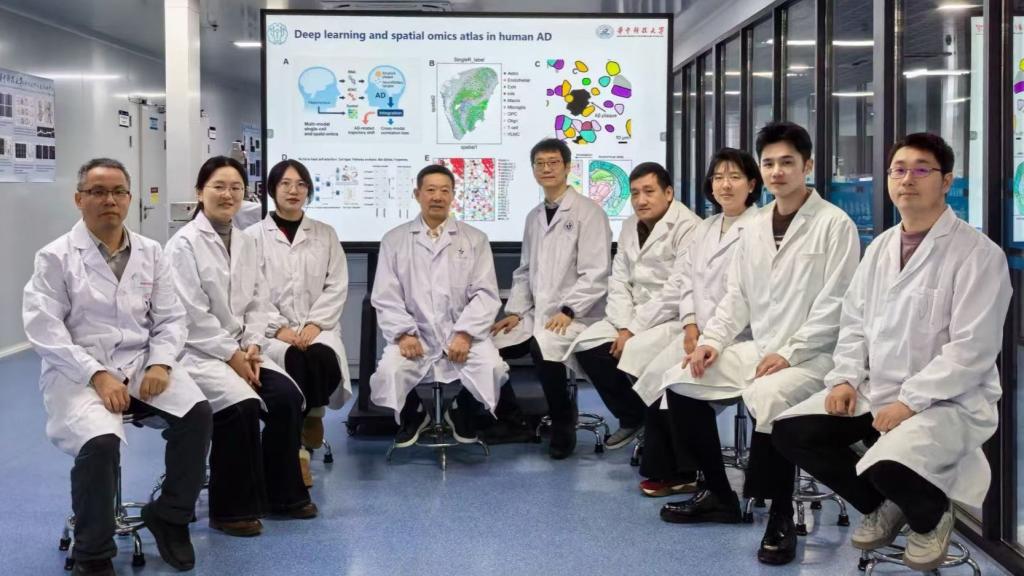
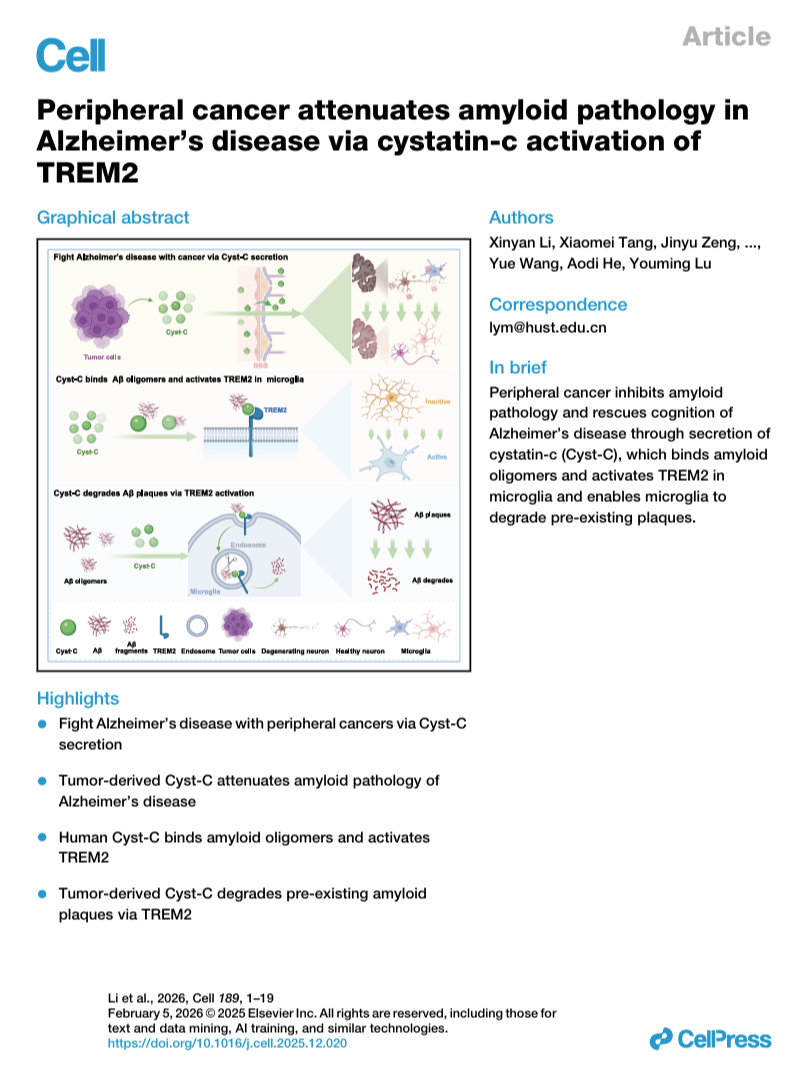
The research, titled “Peripheral cancer attenuates amyloid pathology in Alzheimer’s disease via cystatin C activation of TREM2,” was prompted by a long-observed phenomenon: cancer patients have a significantly lower risk of developing Alzheimer’s. After 15 years of investigation, the team identified cystatin C (Cyst-C), a protein isolated from the plasma of patients with seven cancer types, as the key factor underlying this effect.
At the molecular level, Cyst-C acts as a “molecular glue,” binding to and activating the TREM2 receptor on microglia—the brain’s immune cells. This activation bridges the amyloid plaques to the microglia, triggering their phagocytic clearance. The study is the first of its kind to define Cyst-C as a functional agonist of TREM2, providing a clear theoretical foundation for future drug development.
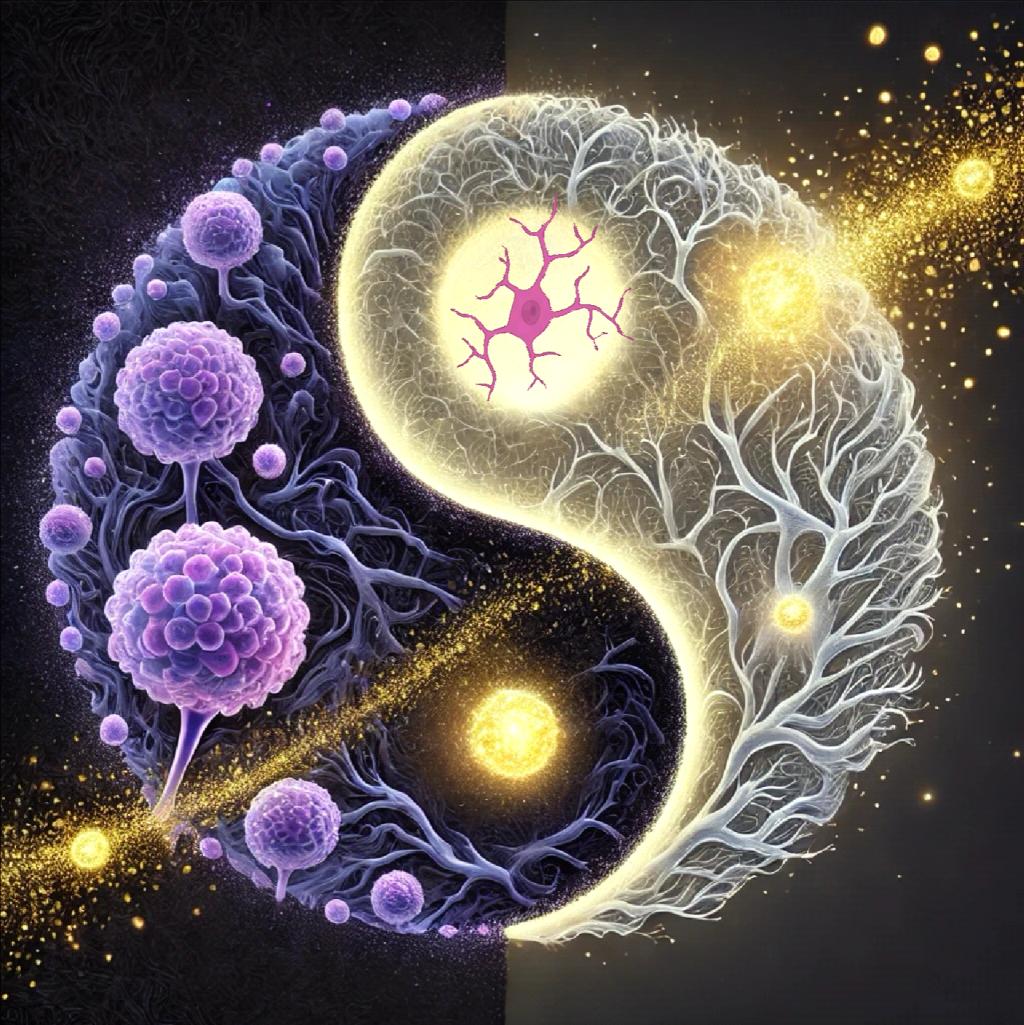
This discovery shifts the therapeutic paradigm from “inhibiting plaque formation” to “promoting plaque clearance,” offering a promising strategy for patients who already have significant plaque buildup. It also represents a modern molecular testimony of an ancient concept of “fighting poison with poison”—capitalizing on one disease process to combat another.
The findings establish a previously unknown link between cancer and neurodegeneration, opening new avenues for translational research. The team’s 15-year endeavor provides a new scientific framework that could ultimately lead to innovative therapies that will benefit over millions of Alzheimer patients in China and beyond.




 Chinese