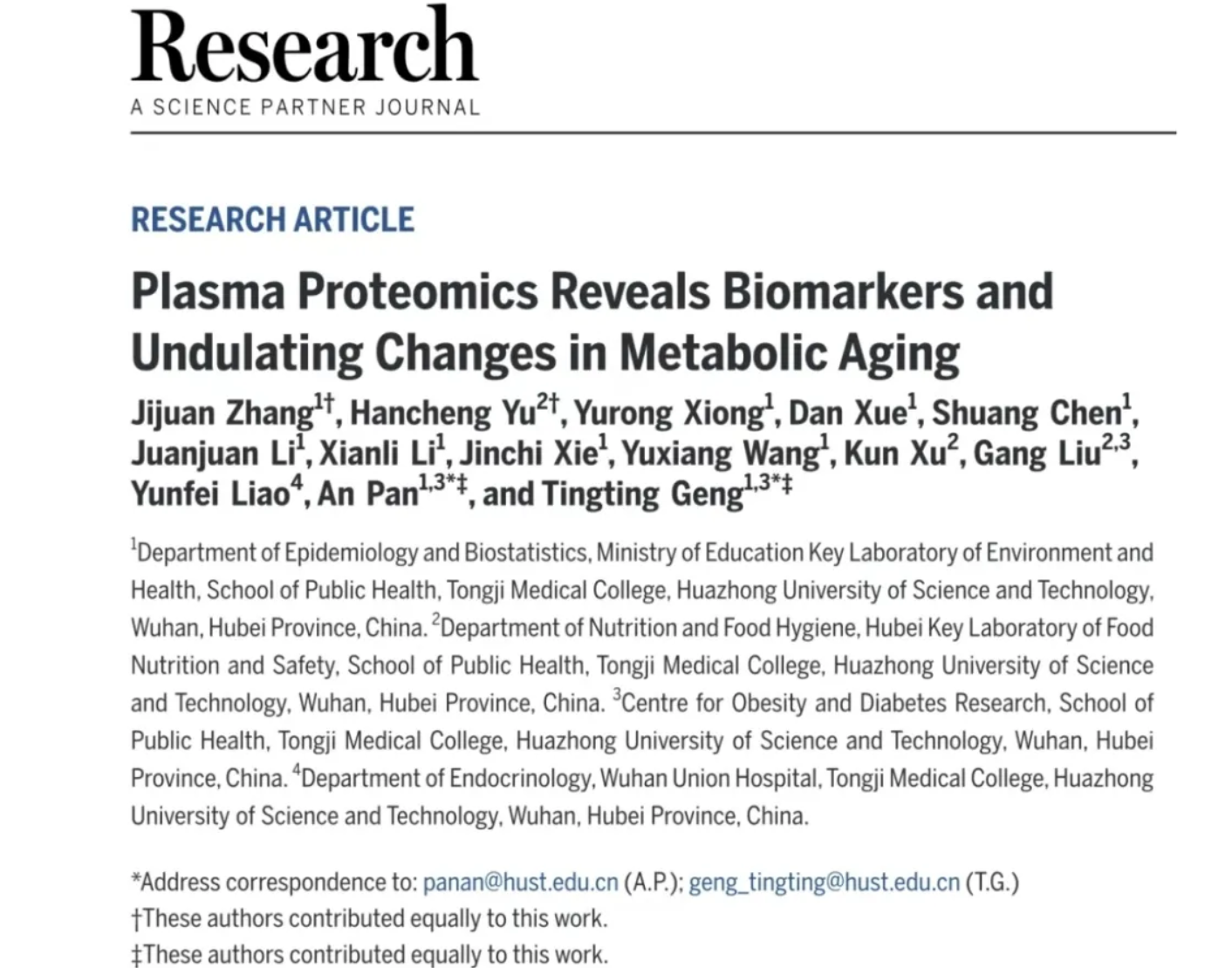
A research team led by Professors PAN An and GENG Tingting from the School of Public Health at Tongji Medical College of Huazhong University of Science and Technology (HUST) has made significant progress in mapping out the proteomic landscape of metabolic aging. Their findings, appearing in the journal Research, identified key plasma proteins that are associated with metabolic aging and revealed critical periods during which these proteins undergo dynamic changes, laying the bedrock for developing biomarkers and personalized strategies for healthy aging.
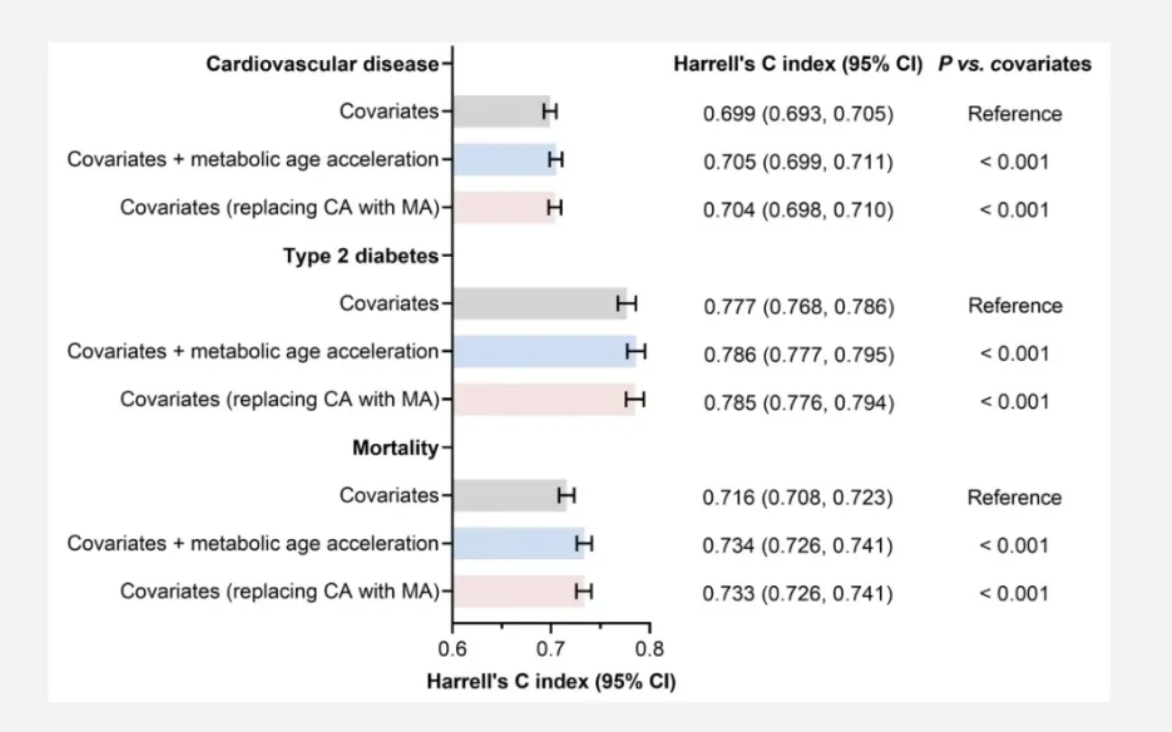
With the global population aging, metabolic decline has emerged as a major risk factor for cardiometabolic diseases and mortality. To better understand this process, the team developed a metabolic biological age (MetaboAge) using data from over 200,000 participants. They demonstrated that MetaboAge improved the prediction of mortality, cardiovascular disease, and type 2 diabetes beyond traditional risk factors, and correlated closely with other aging hallmarks, such as telomere shortening and frailty.
Among nearly 25,000 participants having both metabolomic and proteomic data, the researchers identified 60 plasma proteins that were consistently associated with multiple aging-related outcomes. Eleven proteins—including GDF15, PLAUR, and TNFRSF10A—emerged as core markers of metabolic aging. These proteins are primarily involved in inflammatory and immune responses, apoptosis, fibrosis, and metabolic regulation.
Importantly, the study uncovered that plasma protein expression fluctuates in waves during the aging process, with distinct peaks corresponding to metabolic ages of approximately 44, 51, and 63 years. These windows may represent critical junctures for metabolic intervention, potentially guiding the timing of preventive strategies.
The research provides a roadmap for population risk stratification and early prevention of cardiometabolic diseases. Future work will focus on validating these findings across diverse populations and elucidating causal mechanisms to support the development of targeted interventions for healthy aging.




 Chinese