A collaborative research effort between the School of Pharmacy and the Department of Urology at Tongji Hospital, Tongji Medical College of Huazhong University of Science and Technology (HUST), has yielded a breakthrough in kidney stone treatment. The joint team has developed a multifunctional carbon dot nanodrug that integrates litholysis, antioxidant activity, and ferroptosis inhibition, offering a promising new therapeutic strategy. The findings were published in Advanced Functional Materials.
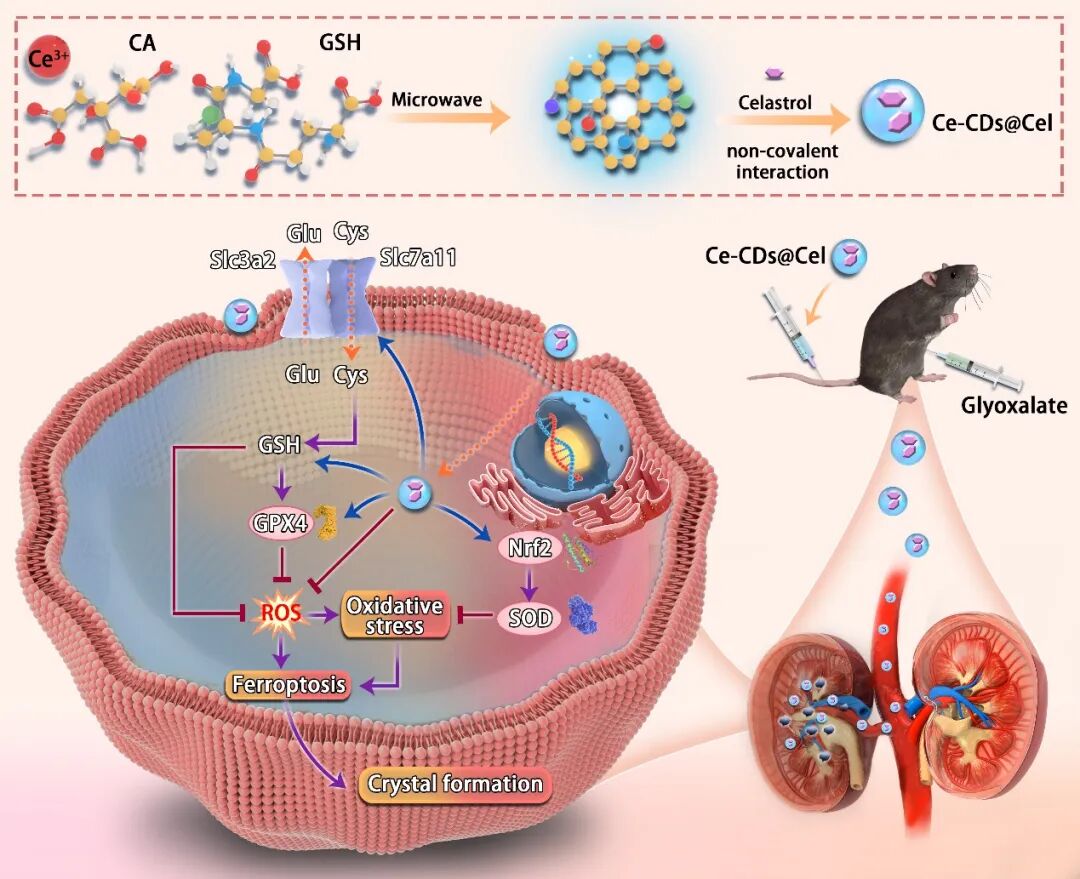
Kidney stones, characterized by high incidence and recurrence rates, currently lack effective pharmacotherapies. Existing citrate-based drugs suffer from some drawbacks, such as poor targeting, requiring high doses, and significant side effects. To overcome these limitations, the research team, led by Prof. TAN Songwei from the School of Pharmacy and Prof. LIU Jihong and Associate Professor JIANG Hongyang from Tongji Hospital, employed an innovative iterative design strategy and constructed a cerium-doped carbon dot delivery system loaded with the natural compound celastrol (Ce-CDs@Cel).
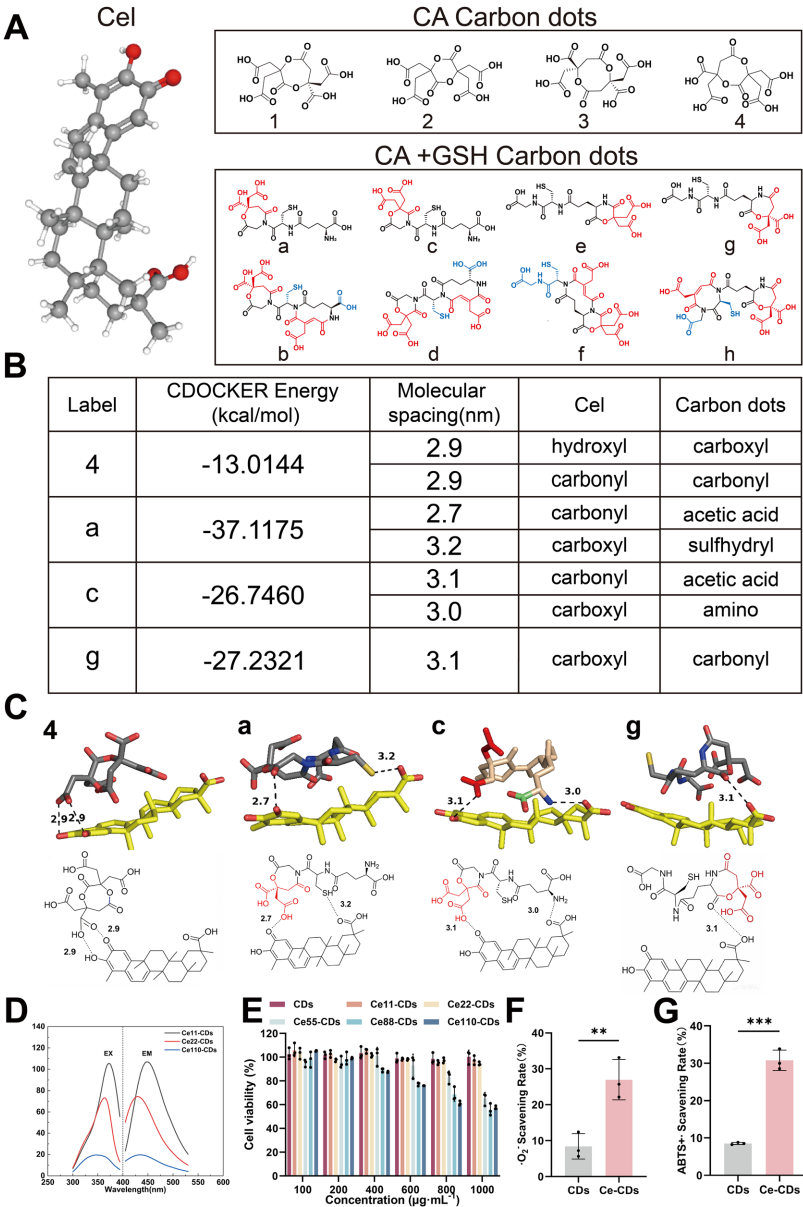
By using molecular docking simulations, the team optimized the carbon dot structure to achieve efficient drug loading through hydrogen bonding and hydrophobic interactions. Incorporating cerium ions endowed the material with potent superoxide radical scavenging activity. The resulting nanodrug demonstrated a litholysis rate of 6.02% on human calcium oxalate stones—approximately twice that of conventional citrate therapy—while also showing high accumulation in kidney lesions and significantly reducing renal crystal deposition and tubular inflammation in animal models.
Single-cell RNA sequencing revealed that Ce-CDs@Cel restores damaged proximal tubule cells and activates the Nrf2/Slc7a11/GPX4 signaling axis, thereby inhibiting ferroptosis, reducing lipid peroxidation, and reversing mitochondrial damage. The nanodrug exhibited favorable biosafety profile, with a 100% survival at the dose of 175 mg/kg.
The study was co-first authored by Associate Professor JIANG Hongyang, ZHU Xiaoyu from Tongji Hospital, and PAN Weizhen from the School of Pharmacy. Prof. TAN Songwei, Professor LIU Jihong, and Associate Professor JIANG Hongyang served as co-corresponding authors.



 Chinese