A research team from the Institute of Reproductive Health, Tongji Medical College of Huazhong University of Science and Technology (HUST) has demonstrated that high repetitive-frequency pulsed magnetic fields (HRFPMF) can improve pregnancy outcomes in abortion-prone mice by inducing macrophage polarization toward the anti-inflammatory M2 phenotype. The findings were published in Biology of Reproduction.
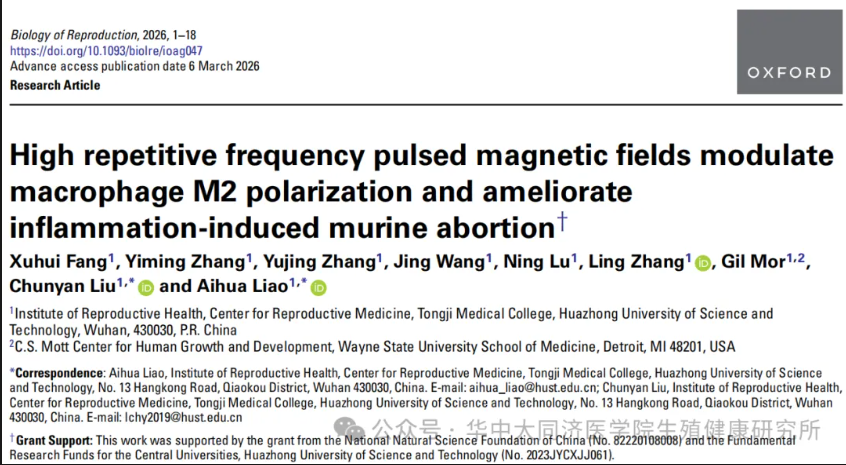
Unexplained recurrent pregnancy loss (URPL) remains a major clinical challenge, with no effective or safe treatments available. Macrophage polarization toward the pro-inflammatory M1 phenotype at the maternal-fetal interface is known to be a key pathological driver, yet therapeutic strategies targeting this process are limited. Physical stimuli, such as magnetic fields, offer a non-invasive, side-effect-free alternative, but their role in maintaining maternal-fetal immune balance has been poorly understood.
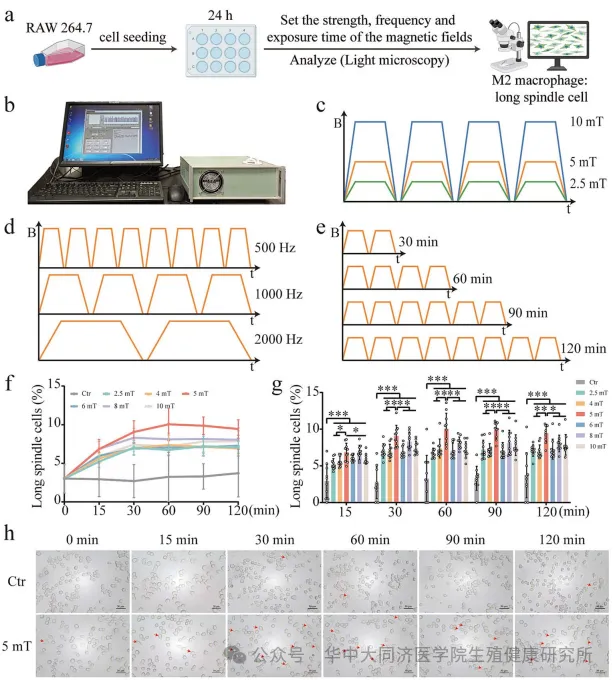
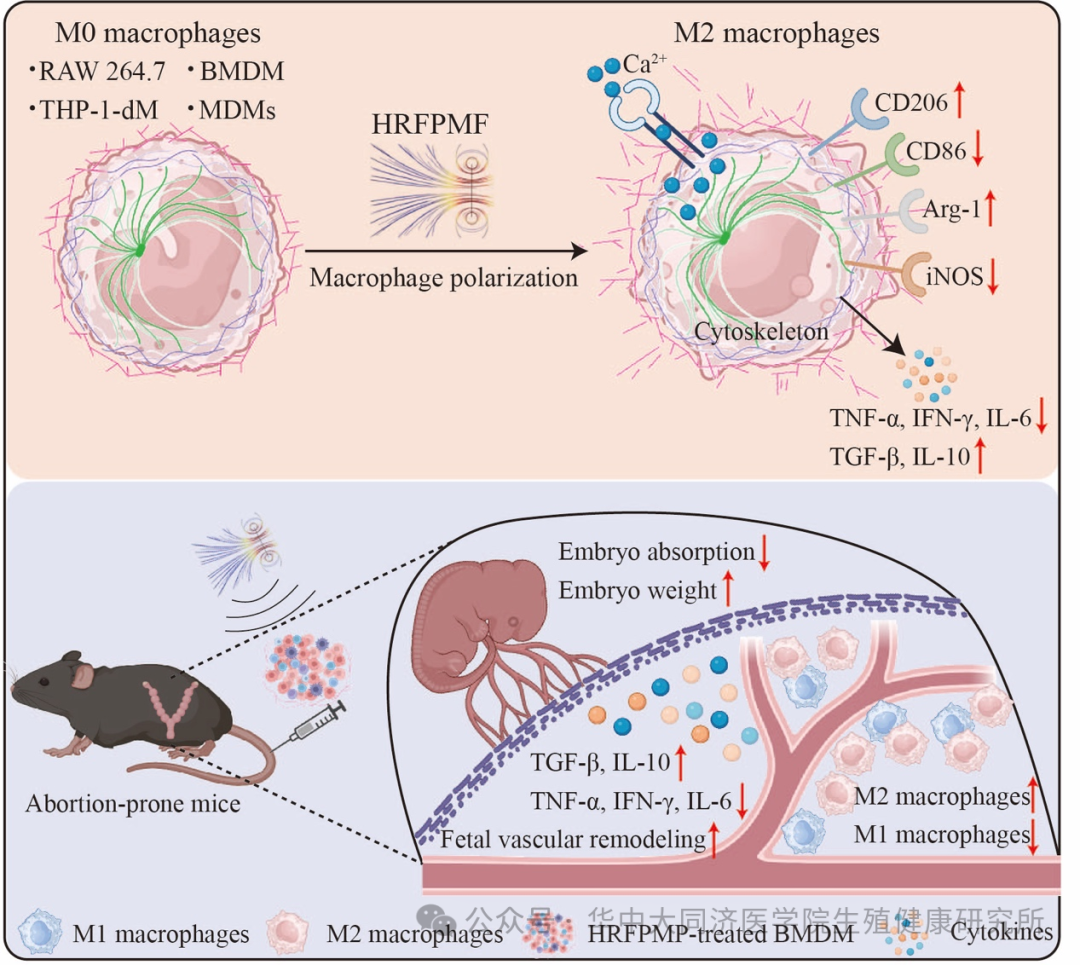
By using a self-developed HRFPMF generator, the team identified an optimal parameter combination (5 mT, 250 Hz, 30 min) that stably induced M2 polarization in mice, human cell lines, and human primary macrophages. Mechanistically, HRFPMF triggered Ca²⁺ influx and cytoskeleton remodeling, driving morphological changes toward the spindle-shaped M2 phenotype. These polarized macrophages enhanced the proliferation, migration, invasion, and secretory function of trophoblast cells.
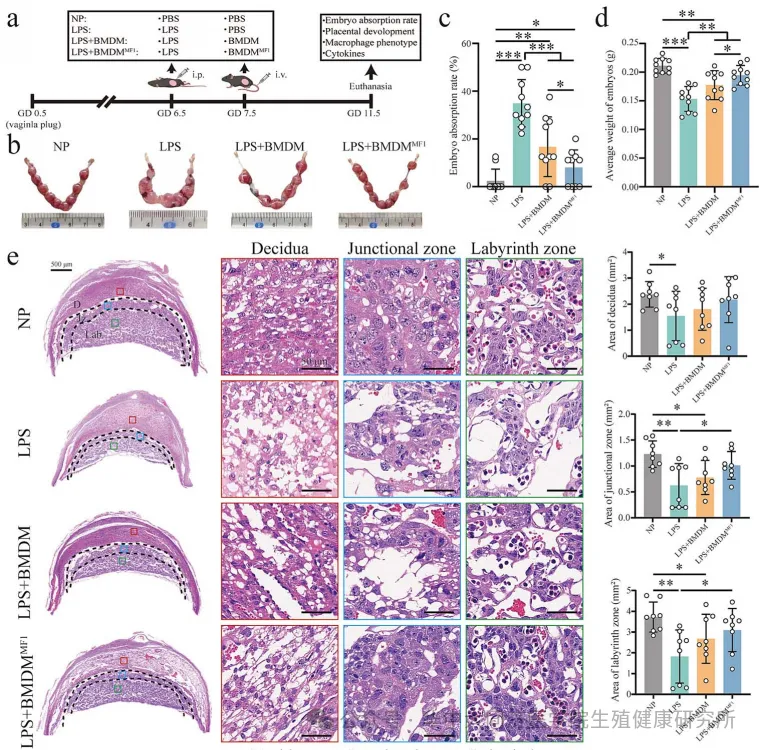
In a mouse model of inflammation-induced abortion, adoptive transfer of HRFPMF-treated macrophages significantly reduced embryo resorption and improved pregnancy outcomes, while enhancing M2 polarization at the maternal-fetal interface and promoting placental vascular development. Safety assessments confirmed that the treatment exerted no adverse effects on cell viability, oxidative stress, or major organs.
The study not only identifies a novel calcium-cytoskeleton pathway for magnetic field-mediated immunoregulation but also highlights the translational potential of HRFPMF as a drug-free, non-invasive therapy for URPL.
First author FANG Xuhui is a PhD candidate at the Institute of Reproductive Health. Prof. LIAO Aihua and Associate Professor LIU Chunyan are co-corresponding authors. The work was supported by the National Natural Science Foundation of China and the HUST Independent Innovation Fund.





 Chinese