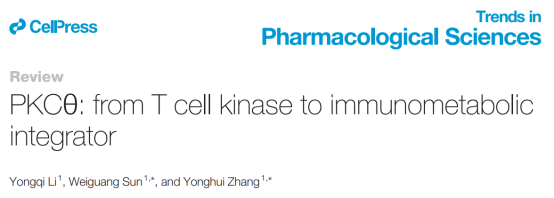
A research team led by Prof. ZHANG Yonghui from the School of Pharmacy at Tongji Medical College of Huazhong University of Science and Technology (HUST) has published a comprehensive review in Trends in Pharmacological Sciences, a Cell Press journal, proposing that protein kinase C theta has evolved beyond its classical role as a T-cell signaling molecule to function as a critical immunometabolic integrator linking immune signaling, cellular metabolism, and the disease microenvironment. The review, titled "PKCθ: from T cell kinase to immunometabolic integrator," was authored by doctoral candidate LI Yongqi as the lead author, with Prof. ZHANG Yonghui and Associate Professor SUN Weiguang serving as corresponding authors.
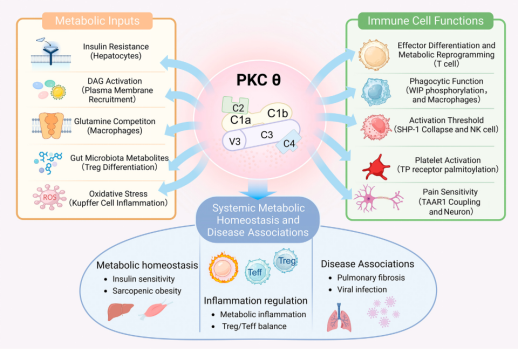
Protein kinase C theta has long been recognized as a key kinase implicated in T-cell activation. However, the review synthesizes recent advances to demonstrate that PKCθ's functional repertoire extends far beyond this traditional scope. The article systematically summarizes its roles in T-cell activation, macrophage phagocytosis, natural killer cell function, tumor immune regulation, and metabolic inflammation, while discussing its complex, context-dependent functions that can be either oncogenic or antitumor in different cancer-related settings.
With regard to the drug development, the review notes a significant progress in PKCθ-targeting strategies. The field is progressively expanding from conventional ATP-competitive inhibitors to encompass allosteric modulators, PROTAC-mediated targeted degraders, protein–protein interaction modulators, and interface-targeting approaches. The authors argue that the future PKCθ-related drug development should pivot away from merely achieving stronger kinase inhibition and shift toward a precise spatiotemporal regulation of PKCθ function in appropriate disease contexts. This paradigm shift, the review contends, could provide new theoretical foundations for the research of autoimmune diseases, metabolic inflammation, tumor immunotherapy, and precision medicine.
LI Yongqi, the first author, was invited to participate in the newly launched "TrendsTalk: Meet the First Authors" series by Trends in Pharmacological Sciences. In the interview, he shared his journey into the field, describing how his interest in medicine, public health, and immune-related diseases grew during an exchange program at the University of Cambridge, and how he has since been involved in the research on the immunomodulatory effects and mechanisms of bioactive small molecules derived from natural products under the guidance of Professor ZHANG Yonghui and Associate Professor Sun Weiguang.
This achievement mirrors the university's ongoing advancements in interdisciplinary research involving natural product chemistry, immunopharmacology, and drug discovery, while also showcasing the active engagement of young researchers in international academic exchange. Moving forward, the team plans to further look into the immunoregulatory mechanisms of bioactive small molecules derived from natural products, key nodes in immunometabolism, and intervention strategies for related diseases, with an aim of providing new insights and a theoretical bedrock for innovative drug discovery and translational research.
The work was supported by the Hubei Provincial Key Laboratory of Natural Product Chemistry and Resource Evaluation. The review is available online with DOI: 10.1016/j.tips.2026.04.003.




 Chinese