A research team led by Prof. GUO Zheng from the School of Basic Medicine at Tongji Medical College, Huazhong University of Science and Technology, has published a landmark study in Nature that reveals the molecular mechanism underlying the "division counter" embedded in intestinal stem cells. The discovery overturns long-held assumptions about how stem cells maintain tissue balance and opens new avenues for regenerative medicine and the treatment of differentiation-related diseases.
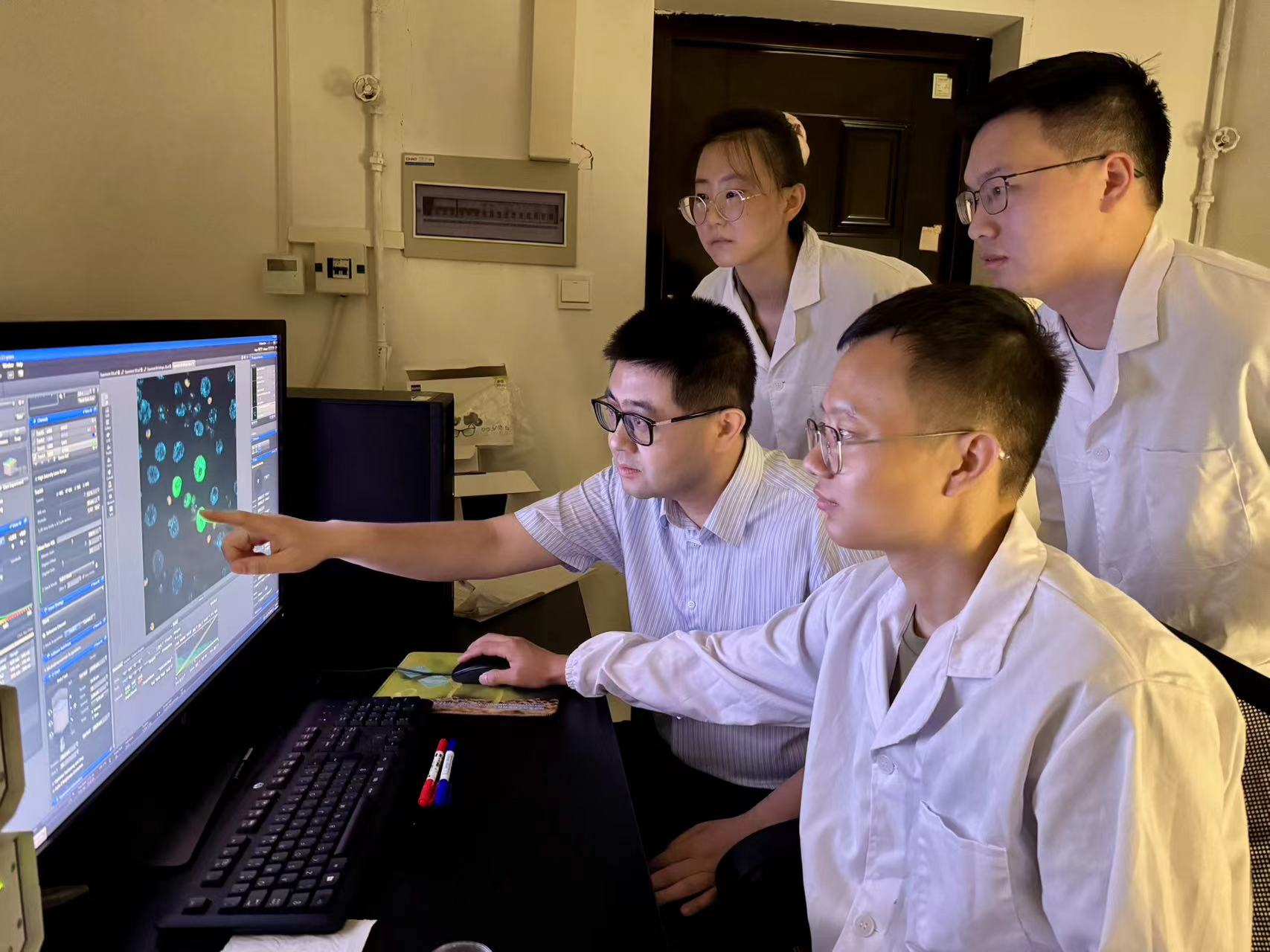
Human intestinal epithelial cells undergo complete renewal every three to five days, a process driven by the continuous division and differentiation of intestinal stem cells. Over past decades, a fundamental question lingered: Why do nutrient-absorbing enterocytes and hormone-secreting endocrine cells maintain a constant ratio when stem cells divide? The prevailing view attributed this stability to random probability. However, through more than a decade of lineage tracing and genetic screening, Professor GUO's team discovered that stem cell fate is not stochastically determined but follows a precise "8+1" division counting rule, working like a finely-tuned instrument.
The study confirmed that after Drosophila intestinal stem cells complete eight consecutive divisions producing enterocytes, they precisely switch to the production of endocrine cells during the ninth division. This switch-like mechanism ensures that endocrine cells are evenly distributed throughout the intestine, allowing for better nutrient sensing and regulation of intestinal function.
At the molecular level, the team discovered that two antagonistic protein groups, TrxG and PcG, construct a "division counter" within stem cells through histone modifications. As stem cells divide, activating histone marks are gradually diluted while repressive marks accumulate. When repressive marks reach a specific threshold, they trigger a switch in stem cell differentiation direction. Remarkably, newly generated endocrine cells transiently activate the Notch signaling pathway in stem cells, resetting the count to zero and initiating a new life cycle.
This study provides the first evidence that stem cells can "remember" their own division count via epigenetic mechanisms, completely overturning traditional random probability models and offering a new paradigm for understanding tissue homeostasis maintenance. The lineage tracing and histone replacement systems established for Drosophila intestinal stem cells also offer important tools for future research.
Prof. GUO noted that this division counting mechanism may be widespread across adult stem cells, such as mammalian hematopoietic stem cells. The Notch signaling pathway and histone modification enzymes identified in this study hold promise as potential drug targets for regulating stem cell differentiation, opening new clinical approaches for the repair of intestinal injuries, and treatment of endocrine disorders and cancers.




 Chinese