The School of Basic Medicine, Tongji Medical College of Huazhong University of Science and Technology (HUST) commenced the fall semester with a series of engaging "first lectures" delivered by distinguished faculty members, setting the tone for the new academic year.
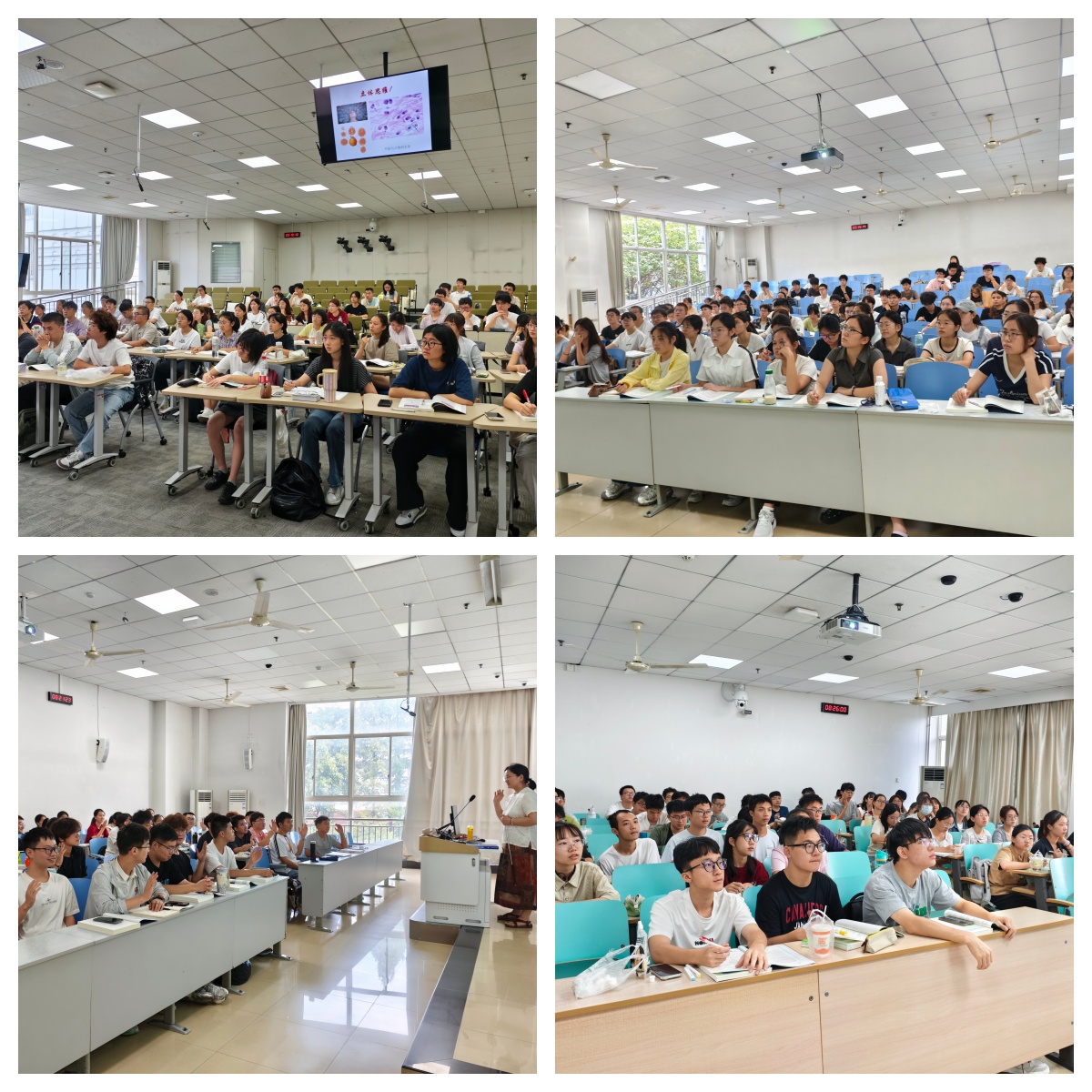
Prof. SHI Anbing opened the Cell Biology course for undergraduate students in the Basic Medical Sciences program. He structured his lecture around four core physiological modules—material transport and homeostasis, energy and metabolism, signaling and communication, and macromolecular life cycles—helping students build up a comprehensive knowledge framework. One student noted that the lecture marked a transformative moment, translating vague perceptions of basic medical sciences into concrete facts.
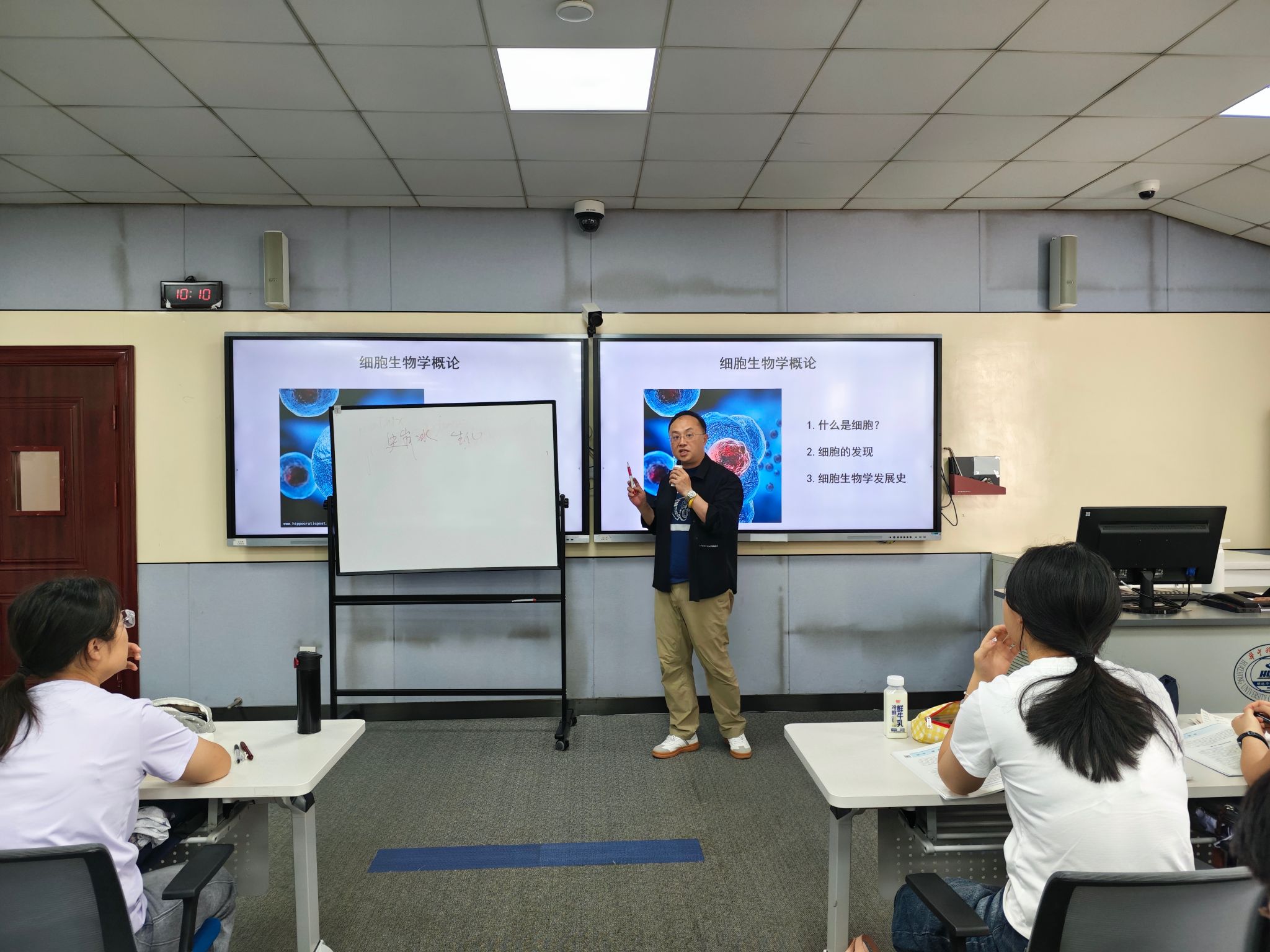
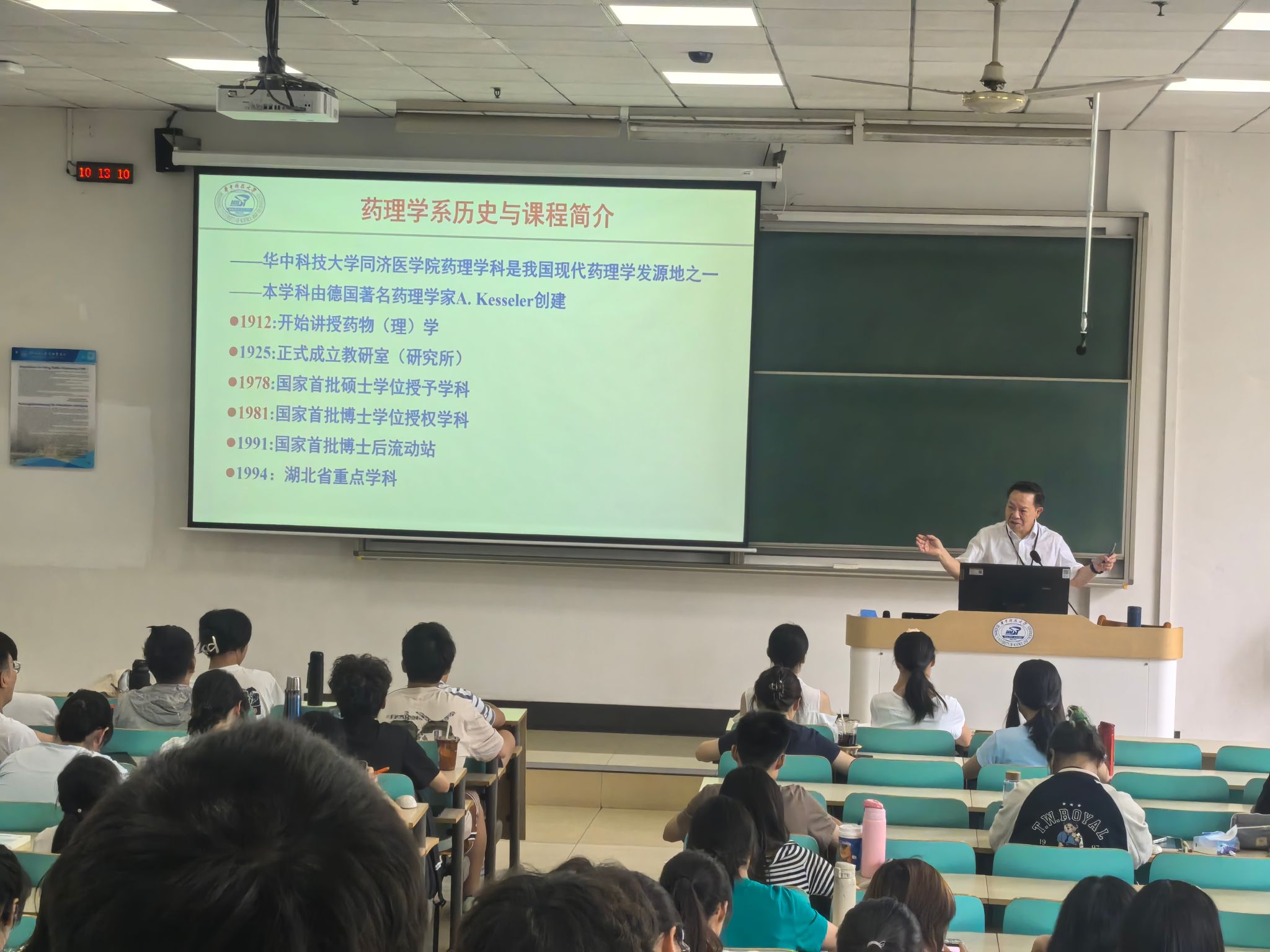
In Pharmacology lectures, Professors CHEN Jianguo and MING Zhangyin taught separate sessions for majors in clinical medicine, medical imaging, and anesthesiology. Using a real prescription as a starting point, Prof. CHEN illustrated how pharmacology plays a central role in clinical practice while explaining the dialectical relationship between medicines and toxins. Both professors introduced their teaching teams and recollected the history of the program at Tongji Medical College, encouraging students to shoulder their responsibilities as future medical professionals.
Prof. HU Qinghua delivered the Pathophysiology lecture for the Clinical Medicine Qiming Experimental Class, emphasizing the discipline's role as a bridge between basic and clinical sciences. By giving clinical cases and the example of a massive hemorrhage, he demonstrated how pathological processes and vicious cycles unfold. He stressed the importance of critical thinking, mathematical logic, and systematic reasoning.
Prof. ZHU Lingqiang took a unique approach in his Pathophysiology lecture for students majoring in the Integrated Traditional Chinese and Western Clinical Medicine students. He introduced ancient Chinese perspectives on pathophysiology, combining time-honored wisdom with modern medical knowledge, and encouraged students to strengthen cultural confidence while pursuing innovations by taking advantage of heritage.
Multiple faculty members from the Department of Histology and Embryology also taught the first lectures for various majors, each bringing distinctive teaching styles to create a lively classroom atmosphere. Prof. ZHU Pengcheng's Pathology lecture systematically outlined the course framework and explained some key concepts such as cellular adaptation and damage, immersing students in the subject matter.
The Department of Human Anatomy implemented a tiered instruction mode tailored to clinical and non-clinical majors, emphasizing practical application for the former and foundational theory for the latter.
Teaching supervisor ZHOU Houlun conducted classroom observations, while Party Secretary REN Yu and Vice Dean WANG Fang visited classes for teaching quality inspection. The school's leadership reaffirmed its commitment to character and talent cultivation, which they believe is the fundamental mission of medical education.
These substantive first lectures not only opened the paths to professional knowledge but also handed down a long-held spirit. Faculty members' rigorous scholarship and dedication illuminated the students' future roads, as they carry the Tongji tradition into the new semester.



 Chinese