A research team led by Prof. ZHANG Yonghui from the School of Pharmacy, Tongji Medical College of Huazhong University of Science and Technology, has unveiled the biosynthetic mechanism of cytosine heteropolymers (meroaspochalasins, mAPOs), naturally occurring compounds produced by the fungus Aspergillus flavipes with significant potential in antitumor drug development. The findings were published in Angewandte Chemie International Edition, a leading international chemistry journal.
Despite previous identification of core genes involved in cytosine skeleton biosynthesis, the assembly process of mAPOs—complex molecules consisting of multiple subunits—had remained poorly understood. Their low yield in native fungal strains and challenging chemical synthesis had further hindered research and application.
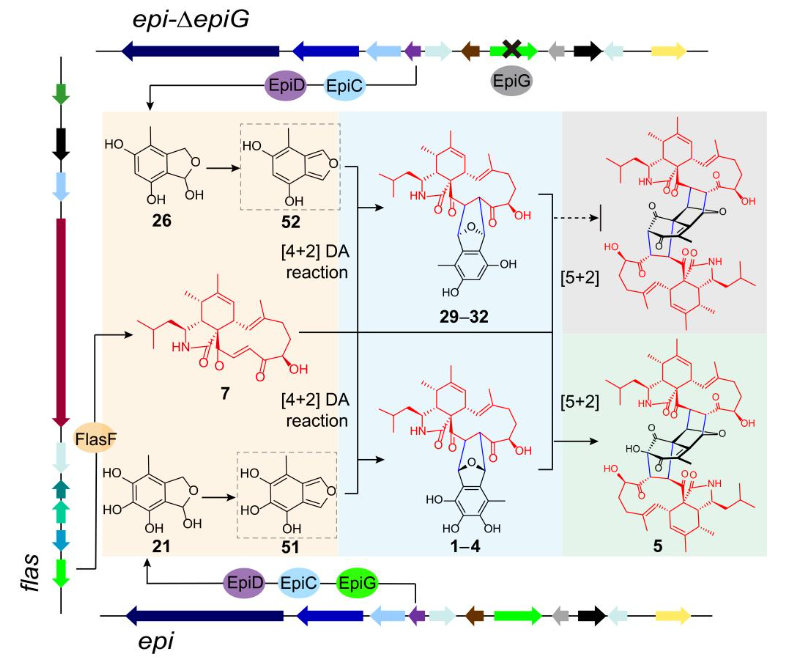
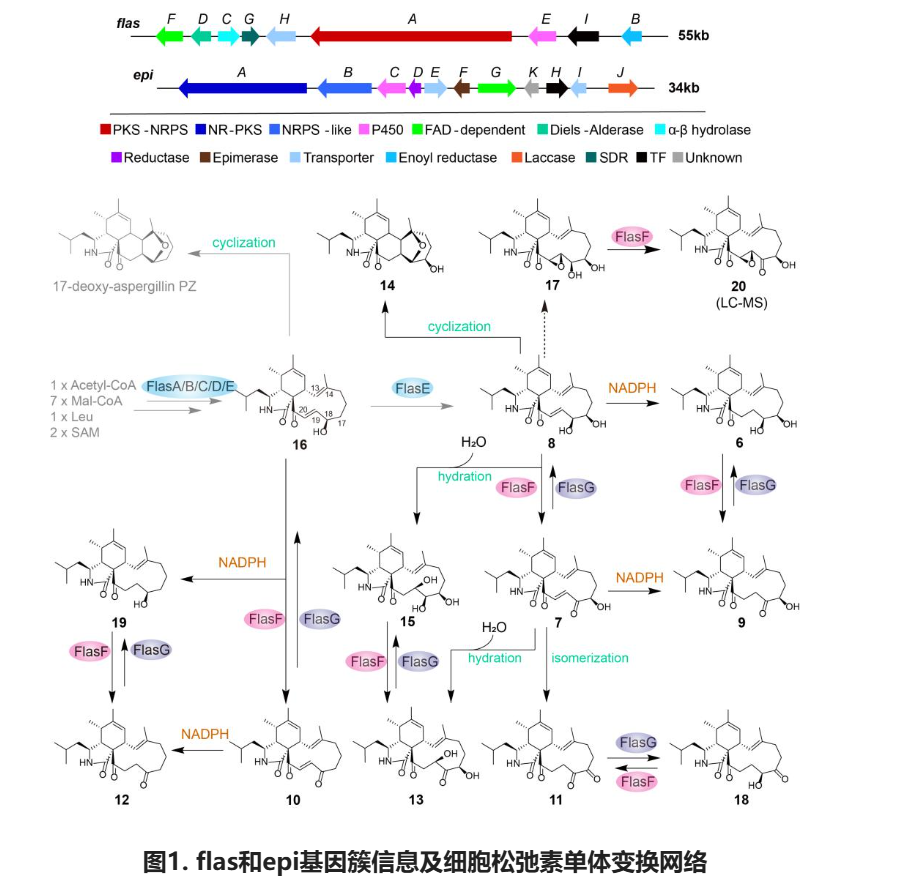
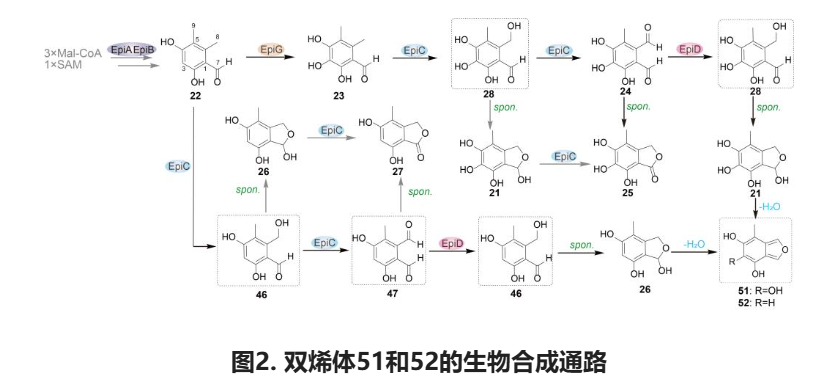
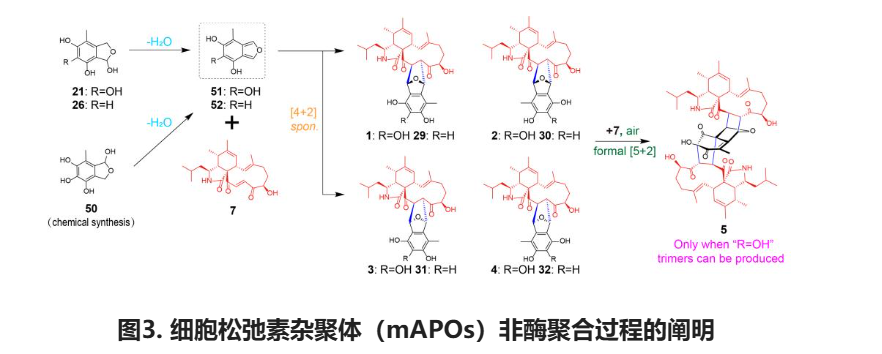
By integrating gene knockout experiments, in vitro enzymatic assays, protein structural analysis, and isotope tracing, the team discovered that two separate biosynthetic gene clusters, flas and epi, collaboratively contribute to mAPO formation. The flas cluster encodes enzymes that generate a dienophile intermediate, while the epi cluster produces a diene precursor. These subunits subsequently undergo spontaneous Diels–Alder cycloadditions, forming dimers and trimers without enzymatic catalysis—a rare and remarkable example of non-enzymatic natural product assembly.
A key flavin-dependent oxidase, EpiG, was shown to catalyze a critical hydroxylation step required for trimer formation. The team also identified the role of supporting enzymes such as EpiD in maintaining redox balance to avoid undesirable byproducts.
This work not only resolves a long-standing mystery in fungal natural product biosynthesis but also opens new routes for bioengineering high-yield mAPO producers and designing novel derivatives through combinatorial biosynthesis.
Doctoral candidate LI Pengkun, master candidate MENG Jie, and postdoctoral researcher Zhang Xiaotian are co-first authors of the study. Prof. ZHANG Yonghui, Associate Prof. ZHOU Yuan and YE Ying, and Prof. ZHU Hucheng, served as corresponding authors. Collaborators included researchers from the Chinese Academy of Agricultural Sciences, Nanjing Agricultural University, the Qingdao Institute of Bioenergy and Bioprocess Technology and Philipps University of Marburg in Germany.
The study was supported by the National Key R&D Program and the National Natural Science Foundation of China.




 Chinese