Study published in Advanced Science reveals potential therapeutic target for age-related ovarian disorders
A research team led by Prof. XIANG Wenpei and Prof. ZHOU Liquan from the Institute of Reproductive Health at Tongji Medical College, Huazhong University of Science and Technology (HUST), has uncovered a critical mechanism by which the mitochondrial protein HIGD1A helps protect ovarian function from oxidative stress. The findings were published on August 13, 2025, in Advanced Science.
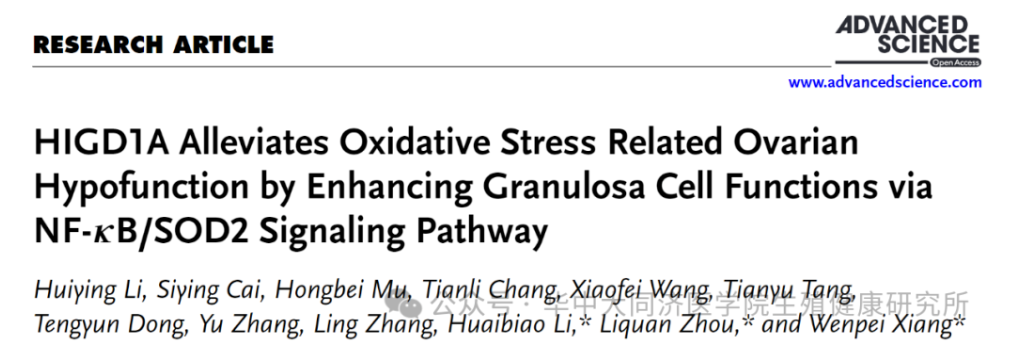
Diminished ovarian reserve (DOR), a condition often associated with aging, involves reduced follicle quality and hormonal changes that can lead to infertility. Oxidative stress is known to contribute to DOR, but the exact molecular mechanisms have remained unclear. The team demonstrated that HIGD1A, a mitochondrial inner-membrane protein, plays a pivotal role in mitigating oxidative damage in granulosa cells—key supportive cells in the ovary.
The researchers observed that HIGD1A expression was significantly reduced in both human DOR patients and a mouse model of oxidative stress. Using in vitro experiments, they showed that suppressing HIGD1A impaired cell proliferation, hormone production, and mitochondrial function, while increasing reactive oxygen species. These effects were mediated through the NF-κB signaling pathway and abnormal upregulation of the antioxidant enzyme SOD2.
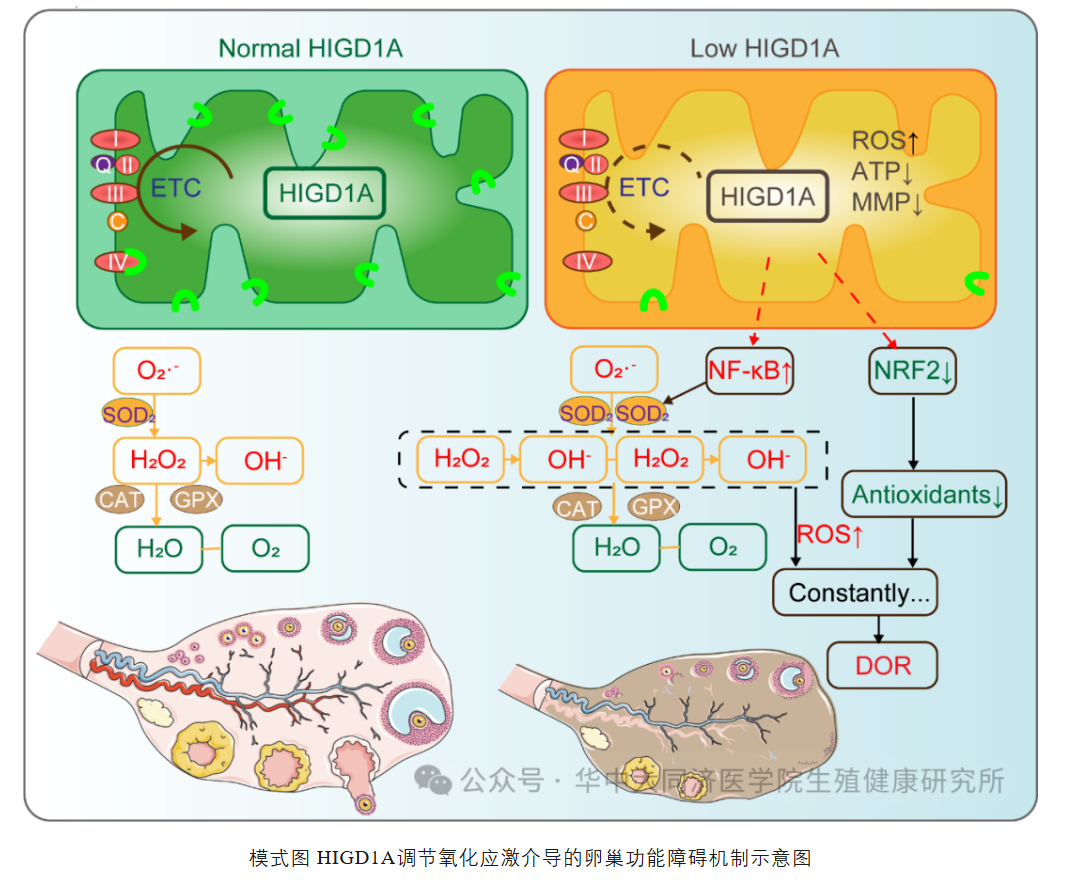
Notably, restoring HIGD1A levels in mice using gene therapy alleviated ovarian damage, improved hormone profiles, and enhanced antioxidant capacity, suggesting a promising therapeutic strategy for DOR.
The study, for the first time, provided the evidence of the HIGD1A–NF-κB/SOD2 regulatory axis in ovarian granulosa cells, offering new insights into the prevention and treatment of oxidative stress-related female infertility.
The research was co-first authored by Dr. LI Huiying, PhD candidate CAI Siying, and master’s graduate MOU Hongbei. Funding was provided by the National Key R&D Program and the Major Special Project of Hubei Provincial Technology Innovation Program.




 Chinese