Prof. YANG Wei’s team from the School of Public Health at Tongji Medical College, Huazhong University of Science and Technology (HUST), has recently published two significant studies, supported by the National Key R&D Program and the National Natural Science Foundation of China. The research introduces an innovative biomaterial for cardiac repair after myocardial infarction and elucidates the mechanism by which a common food toxin impairs cognitive function.
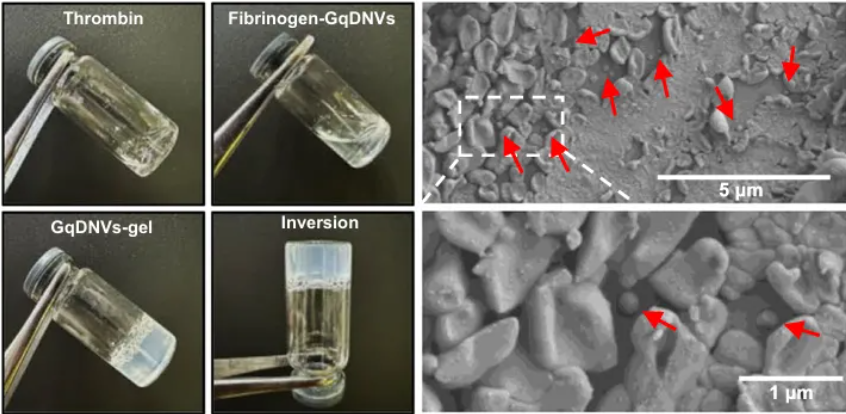
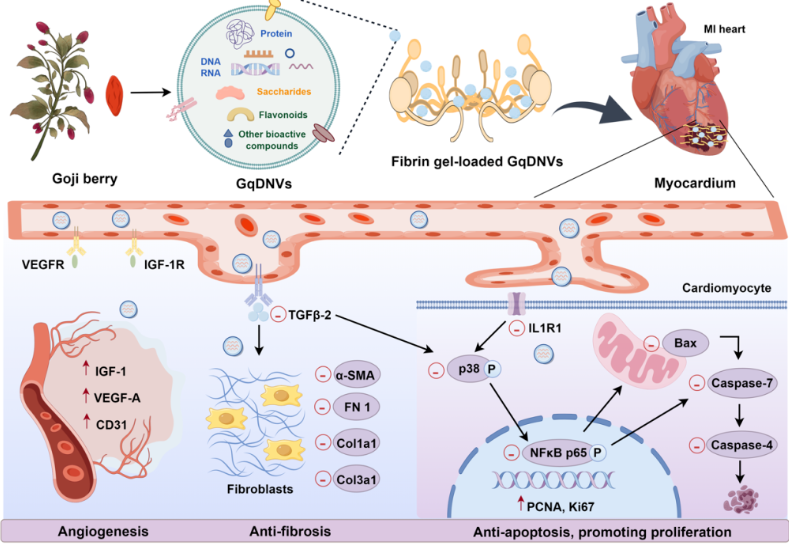
In the first study, published in Journal of Nanobiotechnology (IF 2024 = 12.6), the team developed a fibrin gel loaded with exosome-like nanovesicles derived from goji berries (GqDNVs-gel) to target and repair heart tissue after myocardial infarction. The gel system significantly improved survival rates, cardiac function, and tissue regeneration in animal models within 14 days post-infarction. Multi-omic analyses revealed that the therapeutic effects are mediated through suppression of the p38 MAPK/NF-κB pathway and restoration of the upset balance of lipid metabolism. The technology has been granted a patent and represents a promising clinical strategy for heart attack recovery.
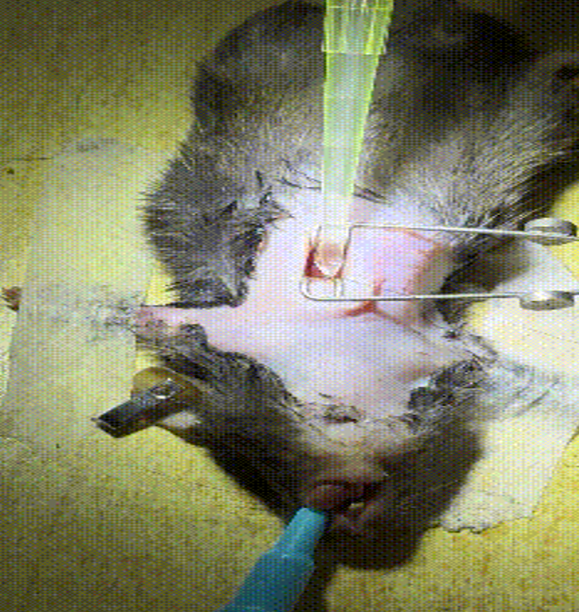
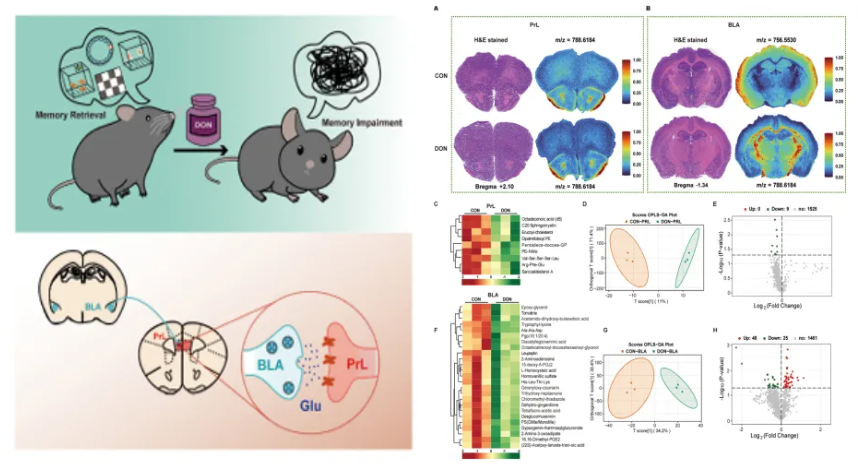
The second study, appearing in Journal of Hazardous Materials (IF 2024 = 11.3), investigated the neurotoxic effects of deoxynivalenol (DON), a widespread food contaminant produced by Fusarium molds. Using optogenetics, electrophysiology, and metabolomic profiling, the researchers demonstrated that DON exposure disrupts neural communication between the basolateral amygdala and prelimbic cortex, leading to impaired spatial memory and synaptic damage in mice. They further identified sphingomyelin synthase 2 (SMS2) as a key regulator of this process, suggesting its potential as a therapeutic target to counteract DON-related cognitive decline.
Both studies share first authorship between PhD candidates ZHOU Huanhuan and YANG Liunan, with Prof. YANG Wei being the corresponding author.




 Chinese